
Missing teeth can affect much more than your smile. They can impact your ability to eat comfortably, speak clearly, and maintain proper oral health. Fortunately, dental implants provide a reliable, long-lasting solution for replacing missing teeth and restoring confidence in your smile.
While many patients are interested in dental implants, it’s common to have questions about what the process involves. Understanding each stage of treatment can help you feel more comfortable and prepared for your journey toward a healthier smile.
In this guide, we’ll walk through the dental implant process step by step, from the initial consultation to the final restoration.
What Are Dental Implants?
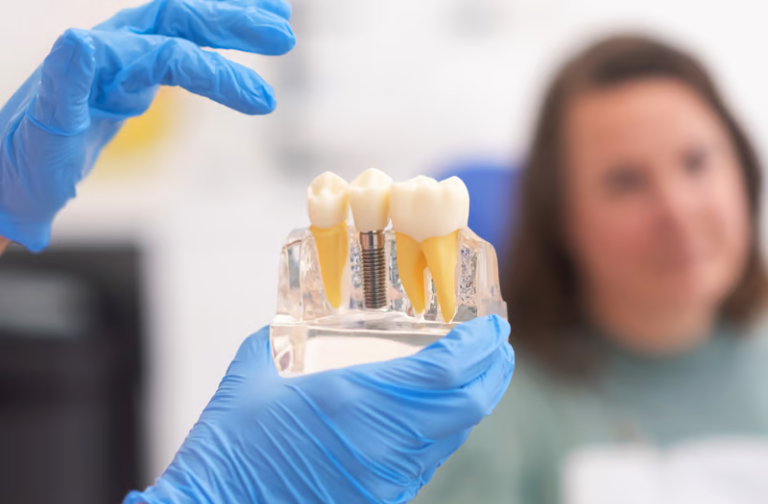
Dental implants are artificial tooth roots made from biocompatible materials, typically titanium. They are surgically placed into the jawbone to support replacement teeth such as crowns, bridges, or dentures.
Unlike traditional tooth replacement options, dental implants are designed to integrate with the jawbone, creating a stable and durable foundation that closely mimics the function of natural teeth.
Dental implants are commonly used to replace:
- A single missing tooth
- Multiple missing teeth
- An entire arch of missing teeth
- Loose or uncomfortable dentures
With proper care and maintenance, dental implants can provide long-lasting results and help preserve oral health for years to come.
Step 1: Initial Consultation and Examination
The first step in the dental implant process is a comprehensive consultation with your dentist.
During this appointment, your dental team will evaluate your oral health and determine whether dental implants are the right solution for your needs. This assessment typically includes:
- A review of your medical and dental history
- A thorough oral examination
- Digital X-rays or 3D imaging
- Evaluation of bone density and gum health
- Discussion of your treatment goals
The purpose of this consultation is to create a personalized treatment plan based on your unique situation.
Your dentist will also discuss the number of implants needed, the estimated timeline, and any preparatory procedures that may be required before implant placement.
Step 2: Treatment Planning
Once you are determined to be a suitable candidate, the next step involves detailed treatment planning.
Advanced imaging technology allows your dental team to assess the structure of your jawbone and identify the optimal location for implant placement. Precise planning helps improve implant success rates and ensures the best possible functional and aesthetic outcomes.
During this phase, your dentist may discuss:
- The type of implant restoration recommended
- Expected healing times
- Sedation or anesthesia options
- Costs and financing options
- Post-treatment care instructions
Every treatment plan is customized to meet the patient’s specific oral health needs.
Step 3: Preparatory Procedures (If Necessary)
Not every patient is immediately ready for dental implant placement.
In some cases, preparatory procedures may be necessary to create a strong and healthy foundation for the implant.
Common preparatory treatments include:
Tooth Extraction
If a damaged or failing tooth remains in place, it may need to be removed before implant treatment can begin.
Depending on the situation, the implant may be placed immediately after extraction or after a healing period.
Bone Grafting
Successful dental implants require adequate jawbone support.
If bone loss has occurred due to tooth loss, gum disease, or trauma, a bone graft may be recommended. This procedure helps rebuild the jawbone and creates a stable foundation for implant placement.
Bone grafts typically require several months of healing before implant surgery can proceed.
Gum Disease Treatment
Healthy gums are essential for implant success.
If periodontal disease is present, treatment will be necessary before moving forward with implant placement.
Addressing gum disease helps reduce the risk of complications and supports long-term implant stability.
Step 4: Dental Implant Placement
The next stage is the surgical placement of the dental implant.
During this procedure, the implant post is carefully inserted into the jawbone. Local anesthesia is typically used to ensure patient comfort, and sedation options may also be available depending on the complexity of the procedure.
The implant is positioned precisely within the bone to support the future restoration.
Many patients are surprised to learn that implant placement is often less uncomfortable than expected. Most individuals experience only mild soreness and swelling following the procedure.
After the implant is placed, the healing process begins.
Step 5: Osseointegration – The Healing Phase
One of the most important stages of the dental implant process is osseointegration.
Osseointegration refers to the natural process by which the jawbone fuses with the implant surface. This biological connection creates a secure and stable foundation for the replacement tooth.
Healing times vary from patient to patient but generally range from three to six months.
Several factors can influence healing, including:
- Overall health
- Bone quality
- Smoking habits
- Oral hygiene practices
- Number of implants placed
During this healing period, patients may receive temporary restorations to maintain appearance and function while waiting for the implant to fully integrate with the bone.
Following your dentist’s post-operative instructions is essential for successful healing.
Step 6: Placement of the Abutment
Once osseointegration is complete, the next step involves attaching the abutment.
The abutment is a small connector piece that joins the implant post to the final restoration.
In some cases, the abutment may be placed during the initial implant surgery. In others, a separate minor procedure may be required after healing is complete.
After the abutment is attached, the surrounding gum tissue is allowed to heal and adapt around the new component.
This stage helps prepare the site for the final restoration.
Step 7: Creating the Custom Restoration
Every dental implant restoration is custom-made to match your natural teeth.
Once the implant site has healed, impressions or digital scans of your mouth are taken to create your final restoration.
Depending on your needs, the restoration may be:
- A dental crown for a single tooth
- A bridge for multiple missing teeth
- An implant-supported denture for full-arch replacement
The restoration is carefully designed to match the size, shape, color, and appearance of your surrounding teeth.
The goal is to create a natural-looking smile that blends seamlessly with your existing teeth.
Step 8: Placement of the Final Restoration
After the custom restoration is completed, it is securely attached to the implant.
Your dentist will evaluate the fit, bite alignment, comfort, and appearance before finalizing the restoration.
Once placed, the dental implant functions much like a natural tooth.
Patients can typically return to normal daily activities shortly after the final restoration is attached.
Many individuals report improved confidence, better chewing ability, and enhanced speech following treatment.
Caring for Your Dental Implants
Although dental implants cannot develop cavities, they still require proper care and maintenance.
Maintaining excellent oral hygiene helps protect the surrounding gums and supporting bone.
Recommended care practices include:
- Brushing twice daily
- Flossing every day
- Using recommended oral hygiene products
- Attending regular dental checkups
- Scheduling routine professional cleanings
- Avoiding tobacco use
Consistent oral care can significantly contribute to the longevity of your dental implants.
Benefits of Dental Implants
Dental implants offer several advantages compared to other tooth replacement options.
Natural Appearance
Implants are designed to closely resemble natural teeth in both appearance and function.
Improved Stability
Because implants are anchored directly into the jawbone, they provide exceptional stability and comfort.
Bone Preservation
Dental implants stimulate the jawbone and help prevent the bone loss that commonly occurs after tooth loss.
Enhanced Oral Function
Patients can eat, speak, and smile with confidence without worrying about movement or slipping.
Long-Term Solution
With proper care, dental implants can provide a durable and reliable solution for missing teeth.
Who Is a Good Candidate for Dental Implants?
Many adults with missing teeth may be candidates for dental implants.
Ideal candidates typically have:
- Good overall health
- Healthy gums
- Adequate jawbone density
- Commitment to oral hygiene
- No uncontrolled medical conditions affecting healing
A consultation with your dentist is the best way to determine whether dental implants are right for you.
Restore Your Smile with Confidence
The dental implant process may involve several stages, but each step is carefully designed to create a strong, natural-looking, and long-lasting tooth replacement solution. From the initial consultation to the placement of your final restoration, dental implants can significantly improve oral health, function, and confidence.
At BCC Dental, our team is committed to helping patients achieve healthy, beautiful smiles through personalized treatment and advanced dental care.
If you’re considering dental implants and would like to learn more about your options, contact us today to schedule a consultation. Our experienced team is here to answer your questions, evaluate your needs, and help you take the first step toward restoring your smile.
Frequently Asked Questions
Most patients report minimal discomfort during the dental implant procedure because local anesthesia is used to numb the treatment area. Mild soreness, swelling, or tenderness may occur after surgery, but these symptoms are typically manageable with prescribed or over-the-counter medications.
The timeline varies depending on individual needs. In many cases, the complete process can take several months, especially if bone grafting or other preparatory procedures are required. The healing phase, known as osseointegration, generally takes three to six months.
With proper care and regular dental visits, dental implants can last for many years and often decades. Maintaining good oral hygiene and avoiding tobacco products can help maximize their lifespan.
Yes. Dental implants can replace a single tooth, several missing teeth, or even a full arch of teeth. Depending on your situation, your dentist may recommend implant-supported bridges or implant-supported dentures.
If there is insufficient bone to support an implant, a bone graft may be recommended. Bone grafting helps rebuild the jawbone and creates a stronger foundation for successful implant placement.
One Response