Missing teeth can affect more than just your smile. Tooth loss may impact your confidence, chewing ability, speech, facial appearance, and overall oral health. Fortunately, modern dentistry offers several effective tooth replacement options, with dental implants and dentures being two of the most common solutions.
Choosing between dental implants and dentures depends on many factors, including your oral health, lifestyle, budget, comfort preferences, and long-term goals. While both treatments are designed to restore your smile and improve daily function, they work very differently and offer unique advantages.
Understanding the differences between dental implants and dentures can help you make a more informed decision about which option may be best suited for your needs.
Understanding Dental Implants
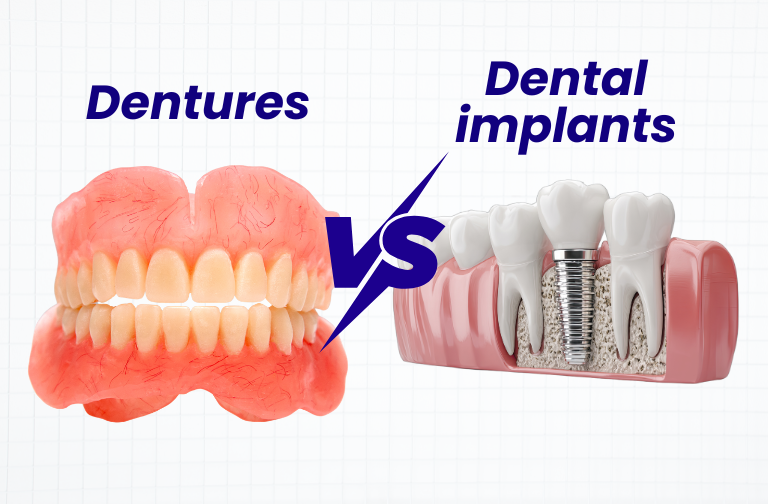
Dental implants are artificial tooth roots made from biocompatible materials such as titanium. They are surgically placed into the jawbone to support replacement teeth, including crowns, bridges, or full arches.
A dental implant consists of:
- The implant post inserted into the jawbone
- An abutment connecting the implant to the restoration
- A custom crown or prosthetic tooth
Once healed, the implant functions similarly to a natural tooth root, providing stability and support for replacement teeth.
Dental implants can replace:
- A single missing tooth
- Multiple missing teeth
- Full arches of teeth
Because implants integrate directly with the jawbone, they provide a highly secure and natural-feeling solution.
Understanding Dentures
Dentures are removable prosthetic devices used to replace missing teeth and surrounding tissues. They are custom-made to fit the patient’s mouth and restore basic chewing and speaking function.
There are two primary types of dentures:
Full Dentures
Full dentures replace all teeth in the upper or lower arch.
Partial Dentures
Partial dentures replace several missing teeth while remaining natural teeth stay intact.
Dentures rest on top of the gums and are removable for cleaning and maintenance.
Modern dentures have improved significantly in appearance and comfort compared to older designs, making them a popular option for many patients.
Appearance and Natural Feel
One of the biggest concerns patients have when replacing missing teeth is achieving a natural-looking smile.
Dental Implants
Dental implants are widely considered the closest replacement to natural teeth. Because the implant is anchored into the jawbone, the final restoration looks and functions very naturally.
Benefits include:
- Realistic appearance
- Natural chewing ability
- Stable fit
- No slipping or shifting
The crown or bridge is custom-designed to blend seamlessly with surrounding teeth.
Dentures
Modern dentures can also provide attractive results, but they may not feel as natural as implants.
Some patients may notice:
- Slight movement during eating or speaking
- Bulkier feel
- Changes in fit over time
Although dentures can improve appearance significantly, they may not fully replicate the sensation of natural teeth.
Comfort and Stability
Comfort is an important factor when choosing between implants and dentures.
Dental Implants
Since implants are permanently secured into the jawbone, they offer excellent stability.
Patients often appreciate:
- Strong biting force
- Comfortable fit
- Minimal movement
- Increased confidence during speaking and eating
Implants eliminate many of the common frustrations associated with removable appliances.
Dentures
Traditional dentures rely on suction, adhesives, or gum support for stability.
Some patients may experience:
- Slipping while eating
- Gum irritation
- Pressure points
- Difficulty adjusting initially
While dentures can become more comfortable over time, they may still require periodic adjustments.
Bone Health and Facial Structure
Tooth loss can lead to gradual jawbone deterioration if the missing tooth roots are not replaced.
Dental Implants Preserve Bone
Dental implants stimulate the jawbone similarly to natural tooth roots. This helps:
- Maintain bone density
- Preserve facial structure
- Reduce bone loss
- Prevent facial sagging
Bone preservation is one of the major long-term benefits of implants.
Dentures Do Not Prevent Bone Loss
Dentures sit on the gums rather than integrating with the jawbone. Over time, bone shrinkage may occur beneath the denture.
This can lead to:
- Changes in facial appearance
- Loosening dentures
- Need for relining or replacement
Bone loss is a common long-term issue for denture wearers.
Durability and Longevity
Dental Implants
Dental implants are designed for long-term durability. With proper oral hygiene and routine dental care, implants can last many years and often decades.
Their strong construction makes them highly resistant to wear and daily chewing forces.
Dentures
Dentures generally require more maintenance and replacement over time.
Common denture-related maintenance may include:
- Relining
- Repairs
- Adjustments
- Replacement every several years
As the mouth changes shape, dentures may gradually lose their fit.
Oral Hygiene and Maintenance
Both implants and dentures require regular care to maintain oral health.
Caring for Dental Implants
Dental implants are cared for similarly to natural teeth.
Patients should:
- Brush twice daily
- Floss regularly
- Attend routine dental visits
- Maintain healthy gums
Proper care supports long-term implant success.
Caring for Dentures
Dentures require daily cleaning and removal.
Patients should:
- Remove dentures nightly
- Clean dentures thoroughly
- Soak dentures as recommended
- Clean gum tissues regularly
Proper maintenance helps prevent irritation, infections, and odor buildup.
Eating and Speaking Ability
Tooth replacement treatments can significantly improve eating and speech function.
Dental Implants
Because implants are firmly anchored, they allow patients to:
- Eat a wider variety of foods
- Bite with greater force
- Speak naturally
- Avoid clicking or shifting
Many patients report that implants feel similar to natural teeth.
Dentures
Dentures can restore chewing ability, but certain foods may remain challenging.
Some patients may initially struggle with:
- Hard foods
- Sticky foods
- Pronunciation adjustments
Over time, most patients adapt successfully, although some limitations may remain.
Treatment Process and Healing Time
Dental Implant Procedure
Dental implants involve a surgical process and healing period.
Treatment may include:
- Consultation and imaging
- Implant placement surgery
- Healing and osseointegration
- Placement of final restoration
The complete process may take several months depending on healing and individual treatment needs.
Denture Process
Dentures generally involve a faster treatment timeline.
The process usually includes:
- Impressions
- Measurements
- Fitting appointments
- Final denture placement
Patients often receive dentures more quickly than implants.
Cost Considerations
Cost is often a major factor when deciding between implants and dentures.
Dental Implants
Dental implants typically involve a higher initial investment due to:
- Surgical placement
- Advanced materials
- Customized restorations
However, many patients view implants as a long-term investment because of their durability and reduced maintenance needs.
Dentures
Dentures are usually more affordable upfront.
However, ongoing maintenance, adjustments, and future replacements may increase long-term costs over time.
Who May Be a Better Candidate for Dental Implants?
Dental implants may be ideal for patients who:
- Want a long-term solution
- Have healthy gums
- Have sufficient jawbone density
- Desire maximum stability
- Prefer fixed teeth over removable appliances
Even patients with some bone loss may still qualify after bone grafting procedures.
Who May Be a Better Candidate for Dentures?
Dentures may be more suitable for patients who:
- Prefer a non-surgical option
- Need a lower upfront cost
- Have significant bone loss
- Require quicker treatment
- Are not ideal candidates for implant surgery
A comprehensive dental evaluation helps determine the most appropriate solution.
Implant-Supported Dentures: A Hybrid Option
Some patients choose implant-supported dentures, which combine the benefits of both treatments.
These dentures:
- Attach securely to implants
- Offer greater stability
- Reduce slipping
- Improve comfort
Implant-supported dentures can provide an excellent middle-ground solution for many individuals.
Making the Right Decision
There is no one-size-fits-all answer when comparing dental implants and dentures. The best option depends on:
- Oral health condition
- Lifestyle preferences
- Budget
- Long-term goals
- Comfort expectations
A personalized consultation with a dental professional is essential to determine the most suitable treatment plan.
Final Thoughts
Both dental implants and dentures can successfully restore missing teeth and improve your smile, confidence, and quality of life. Dental implants offer exceptional stability, bone preservation, and long-term durability, while dentures provide a more affordable and non-surgical tooth replacement solution.
Understanding the benefits and limitations of each option can help you make a confident and informed choice for your oral health needs.
If you are considering tooth replacement options and want professional guidance tailored to your smile, BCC Dental can help you explore the best treatment solution for your unique needs. Contact the clinic today to schedule a consultation and take the next step toward restoring your healthy, confident smile.