When you have a damaged tooth or experience persistent tooth pain, understanding your dental treatment options can help you feel more confident about your next steps. Your dentist may recommend a dental crown, a root canal, or both treatments to protect your tooth and relieve discomfort. Although these procedures are sometimes discussed together, they serve different purposes and address different dental problems.
If you are wondering whether you need a dental crown or a root canal, the answer depends on the condition of your tooth and the tissue inside it. A crown restores the outer part of a tooth, while a root canal treats problems affecting the soft tissue inside the tooth. Understanding how these treatments work can help you ask informed questions and make decisions about your oral health.
What Is the Difference Between a Dental Crown and a Root Canal?
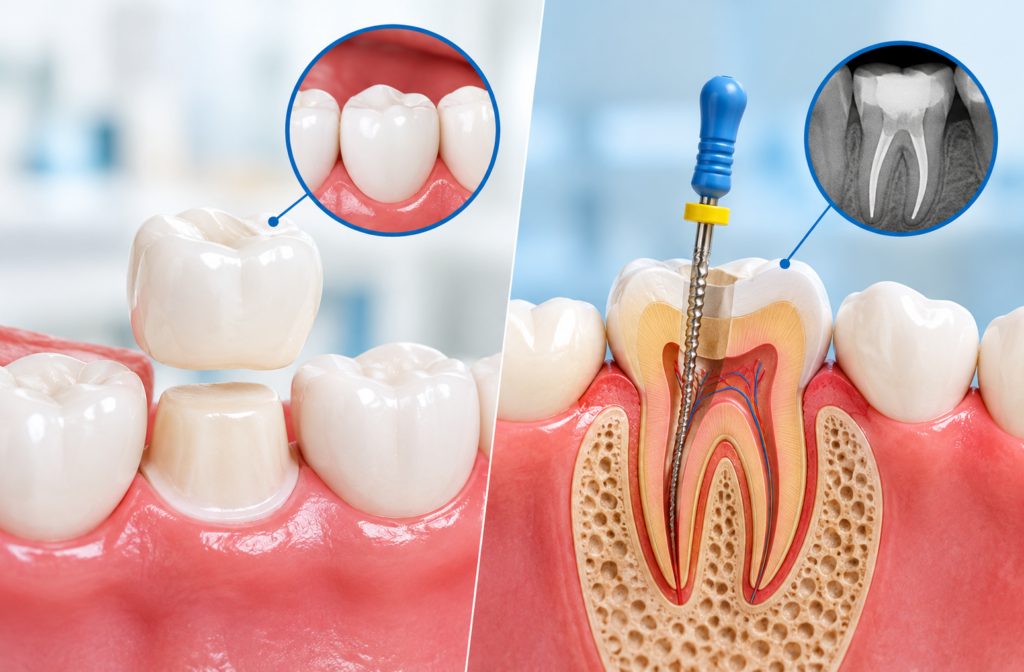
The main difference between a dental crown and a root canal is the problem each treatment addresses. A dental crown is a custom-made covering that fits over a damaged or weakened tooth to restore its shape, strength, and function. A root canal is a procedure that removes infected or severely inflamed tissue from inside a tooth, allowing the natural tooth to remain in place when it can be saved.
Your dentist may recommend a crown if a tooth has extensive decay, a large filling, or a crack that makes it vulnerable to further damage. A root canal may be necessary when the soft tissue inside the tooth becomes infected or irreversibly inflamed because of deep decay, an injury, or another problem. In some cases, the tooth needs both treatments because the root canal addresses the internal problem and the crown helps protect the remaining tooth.
Neither treatment is automatically better than the other because they are not direct substitutes. The right recommendation depends on what is happening inside the tooth, how much healthy tooth structure remains, and whether the tooth can be restored successfully.
What Is a Dental Crown?
A dental crown is a restoration designed to cover the visible portion of a tooth above the gum line. It is often recommended when a tooth has become too weak or damaged to function reliably with a filling alone. By covering the tooth, the crown helps restore its shape and allows you to chew more comfortably.
When Might You Need a Dental Crown?
A dentist may recommend a dental crown for several reasons, depending on the condition of your tooth. Common situations include a tooth with extensive decay, a large existing filling, a significant crack, or a tooth that has undergone root canal treatment and needs additional protection.
Crowns can also be used to restore certain worn or broken teeth and to complete some dental implant treatments. The purpose is to provide a restoration that fits your bite and supports normal chewing while improving the appearance of the tooth when needed. Your dentist will assess how much healthy tooth structure remains before deciding whether a crown is appropriate.
What Happens During a Dental Crown Procedure?
Getting a dental crown usually involves preparing the tooth so the restoration can fit securely. The dentist removes the necessary amount of damaged tissue or tooth structure, takes an impression or digital scan, and arranges for the crown to be made. A temporary crown may be placed while the permanent restoration is being prepared.
At a later appointment, the dentist checks the fit, appearance, and bite before securing the permanent crown. The number of visits and the exact process depend on the type of crown and the treatment approach used by the dental office. Your dentist will explain how to care for the tooth while waiting for the final restoration.
What Is a Root Canal?
A root canal is a treatment used to address infection or serious inflammation in the pulp, which is the soft tissue inside a tooth containing nerves and blood vessels. This tissue can become damaged when bacteria enter through deep decay, a crack, or an injury. If the problem cannot heal on its own, a root canal may help preserve the natural tooth instead of removing it.
When Is a Root Canal Necessary?
A root canal may be recommended when the pulp inside a tooth is infected or irreversibly inflamed. Some people experience a persistent toothache, sensitivity to hot or cold that lingers, pain when biting, or swelling around the affected tooth. However, symptoms vary, and some teeth with significant internal damage may cause little or no discomfort.
Your dentist will examine the tooth and may recommend dental imaging to understand the extent of the problem. The findings help determine whether a root canal is appropriate or whether another treatment would better protect your oral health. Seeking an assessment early can help prevent an infection from progressing and potentially becoming more difficult to treat.
What Happens During a Root Canal Procedure?
During a root canal treatment, the dentist creates an opening in the tooth and removes the damaged or infected pulp. The inside of the tooth is then cleaned, disinfected, and sealed with a suitable filling material to help prevent bacteria from entering again. The aim is to preserve the natural tooth while addressing the source of the problem.
The tooth may need a permanent filling or a dental crown after the procedure, depending on its condition and location. Back teeth often experience greater chewing forces, so a crown may be recommended to reduce the risk of the remaining tooth breaking. Your dentist will explain the restoration needed to help the treated tooth function as reliably as possible.
Can You Need Both a Root Canal and a Dental Crown?
Yes, some teeth need both treatments because each serves a different purpose. A root canal treats the problem inside the tooth, while a crown restores and protects the outer structure. When decay or damage has weakened a tooth significantly, completing the root canal alone may not provide enough strength for everyday chewing.
For example, a molar with deep decay may develop an infection in its pulp and lose a substantial amount of healthy tooth structure. A root canal can treat the internal infection, and a crown may then help protect the remaining tooth from cracking under pressure. The need for a crown depends on the amount of tooth structure remaining, the tooth’s location, and the overall treatment plan.
Not every root canal requires a crown, and not every tooth that needs a crown requires a root canal. A tooth with a healthy pulp but significant structural damage may need a crown alone. Your dentist will recommend the combination of treatments that addresses the actual problem rather than adding procedures that are not necessary.
Dental Crown vs. Root Canal: Which Treatment Is More Painful?
Both procedures are generally performed using local anaesthesia to keep you comfortable during treatment. A root canal may sound intimidating, but its purpose is to remove damaged or infected tissue and relieve the problems causing pain. Many patients feel better after the source of the infection or inflammation has been treated, although some tenderness can remain during recovery.
Getting a dental crown typically involves preparing the tooth and fitting the restoration. You may experience temporary sensitivity or mild gum soreness afterward, particularly if the tooth was already irritated. If a crown is placed following a root canal, your recovery may also depend on the condition of the tooth before treatment.
Your comfort needs should be discussed before either procedure begins. Let your dentist know if you feel anxious, have had difficulty with dental treatment in the past, or need more explanation about what to expect. If you develop severe or worsening pain after treatment, contact your dental office for advice rather than assuming the discomfort is part of normal healing.
How Much Do Dental Crowns and Root Canals Cost?
The cost of a dental crown or root canal depends on the tooth being treated, the complexity of the procedure, and the restoration required afterward. Root canal treatment on a back tooth may involve different considerations from treatment on a front tooth. Similarly, crown prices can vary according to the material used and the amount of preparation needed.
If you need both procedures, your total treatment cost will generally include the root canal and the final restoration, along with any additional services that are required. Dental insurance coverage also varies, so it is important to check the details of your plan before starting treatment. Ask your dentist for a written estimate that explains the expected fees and identifies any services that may be charged separately.
When comparing treatment costs, consider what is needed to preserve the tooth and maintain its function. Choosing a procedure based only on its initial price may not address the underlying dental problem. A clear treatment plan can help you understand your options and prepare for the expected expenses.
How Do You Care for Your Tooth After Treatment?
Good oral hygiene helps protect both crowned teeth and teeth that have undergone root canal treatment. Brush twice daily with fluoride toothpaste, clean between your teeth every day, and attend regular dental checkups. Although a crown covers the visible part of a tooth, decay can still develop around its edges, and the surrounding gums need ongoing care.
After treatment, follow your dentist’s instructions about eating and caring for the affected area. If a temporary crown has been placed, avoid foods that could dislodge it and contact your dental office if it becomes loose. After a root canal, avoid putting unnecessary pressure on a tooth that has not yet received its recommended permanent restoration.
You should also pay attention to changes such as persistent sensitivity, discomfort when biting, swelling, or a crown that feels loose. These symptoms do not always mean the treatment has failed, but they should be assessed by your dentist. Regular monitoring can help identify concerns early and support the long-term health of the treated tooth.
How to Know Which Dental Treatment You Need
The most reliable way to determine whether you need a dental crown, a root canal, or both is to have the tooth examined. Your dentist will consider your symptoms, examine the tooth, and use dental imaging when appropriate to assess the extent of the damage. This information helps distinguish problems affecting the outer tooth from those involving the pulp inside it.
If you are unsure about a recommendation, ask your dentist to explain what is wrong with the tooth and why the proposed treatment is appropriate. You can also ask whether alternatives are available, what the expected benefits and limitations are, and what may happen if treatment is delayed. Understanding the reasoning behind the recommendation can make it easier to feel confident about your decision.
Do not ignore persistent tooth pain or swelling while trying to decide which procedure you need. Early assessment may give you more options for treating the problem and preserving your natural tooth. Facial swelling that affects breathing or swallowing requires emergency medical attention.
Protect Your Smile With the Right Dental Treatment
Understanding the difference between a dental crown and a root canal can help you take the next step when a tooth is painful, damaged, or weakened. A root canal addresses problems inside the tooth, while a crown restores its outer structure and may provide added protection after treatment. The right approach depends on your individual dental needs, so an examination and a clear discussion with your dentist are important.
At BCC Dental, patients in Brampton can seek guidance on dental concerns, restorative treatment options, and ways to maintain a healthy smile. Contact us to schedule an appointment, discuss your symptoms, and learn which treatment may be suitable for your tooth.
Frequently Asked Questions
No, a dental crown and a root canal serve different purposes. A crown covers and protects a damaged tooth, while a root canal treats infected or severely inflamed tissue inside the tooth. Some patients need both procedures to preserve and restore a tooth.
Yes, a dental crown can be placed without a root canal when the pulp inside the tooth is healthy enough to remain. Crowns are often used to restore teeth weakened by large fillings, cracks, or extensive decay. Your dentist will assess the tooth before recommending treatment.
No, not every tooth requires a crown after root canal treatment. The decision depends on how much healthy tooth structure remains, the location of the tooth, and the forces placed on it during chewing. Your dentist will recommend the restoration that best protects the treated tooth.
A dental crown can last many years, although its lifespan varies with the material, bite, oral hygiene, and everyday habits. Regular dental checkups can help identify wear, damage, or decay around the crown. Good home care can help extend its useful life.
Many patients return to normal activities soon after a root canal, but the treated tooth may remain tender for several days. Recovery depends on the level of infection or inflammation before treatment and the complexity of the procedure. Contact your dentist if pain worsens or does not improve as expected.